 DSA Signage
Every retail space communicates with shoppers before a single employee says a word. Storefront signs attract attention, window displays spark curiosity, and in-store messaging helps customers navigate, compare products, and make purchasing decisions. Together, these visual elements shape the shopping experience and influence how customers perceive your brand.
The most effective retail environments use a mix of exterior and interior signage to support visibility, guide customer behavior, and reinforce brand identity. From attracting foot traffic to encouraging purchases at checkout, signage influences nearly every stage of the customer journey. Understanding the different types of retail signage can help you create a more engaging shopping experience while supporting your operational and marketing goals — and DSA Signage can help at every step of the way, with a range of retail signage solutions designed to help businesses attract attention, improve navigation, and strengthen in-store marketing efforts.
What Is Signage in Retail?
Retail signage includes any visual communication you use to inform, direct, or influence shoppers. It shapes every stage of the customer journey, from the moment someone notices your storefront to the moment they complete a purchase at checkout.
Retail signage does more than display information. It actively shapes how customers interpret your brand, how they move through your store, and how quickly they decide to buy. Properly designed signage reduces hesitation, shortens decision cycles, and increases conversion opportunities without changing your product mix or pricing.
You rely on signage to solve three core challenges: to attract attention in crowded retail environments, to guide customers through physical space, and to influence decisions at the exact moment intent forms. When those three elements work together, your store feels easier to navigate and more compelling to shop.
Even subtle signage choices affect behavior. Lighting intensity, placement height, and message clarity all influence whether a customer slows down, looks closer, or keeps walking. That’s why signage functions as both a branding tool and a behavioral tool.
Exterior signage drives visibility and foot traffic. Interior signage supports navigation, highlights products, and reinforces purchase decisions. Together, they form a connected system that supports both marketing and operations.
Most retailers combine multiple signage formats, including:
- Traditional printed signage
- Illuminated LED light box displays
- Backlit fabric graphics
- Digital displays and LED video walls
- Wayfinding and directional signage
You will see more retailers investing in illuminated systems because they maintain clarity across changing lighting conditions while strengthening visual consistency. LED-based signage also simplifies updates, reduces maintenance, and supports faster campaign execution in fast-moving retail environments.
Types of Retail Signage
Exterior Retail Signage
Exterior signage determines whether potential shoppers enter your store or walk past it. It communicates brand identity instantly and sets expectations before any interaction occurs inside your space.
In competitive retail locations, exterior signage competes for attention instead of just attracting it. Your signage must outperform nearby visual noise, especially in malls, strip centers, and dense shopping districts where customers process dozens of storefronts in seconds.
A strong exterior presence also shapes perceived value. Customers often associate lighting quality, clarity, and consistency with product quality before they ever enter your store. That first impression directly influences whether they trust your brand enough to step inside.
Storefront Signs
Storefront signs anchor your brand in physical space. You position them where they deliver maximum visibility from streets, sidewalks, or parking areas.
Well-executed storefront signage helps you:
- Improve visibility across high-traffic retail zones
- Reinforce brand identity at scale
- Create consistency across multiple store locations
- Guide customers directly to entrances without confusion
Many retailers rely on illuminated storefront signage to maintain visibility after sunset or in enclosed shopping environments where ambient lighting shifts throughout the day.
Window Displays
Window displays act as your first sales conversation with a potential customer. You can use them to communicate promotions, product value, and brand personality before a shopper enters your store.
Strong window signage avoids clutter and focuses your customers’ attention. You guide the viewer toward one clear message or product story, which increases conversion from foot traffic and reduces decision friction at entry.
You typically rotate window displays to align with merchandising cycles, promotional calendars, and seasonal campaigns.
Window signage works especially well when you want to:
- Highlight seasonal campaigns
- Promote limited-time offers
- Introduce new product lines
- Visually communicate brand storytelling
- Showcase premium or featured merchandise
Frequent updates keep your storefront visually active and encourage repeat engagement from customers who pass your location regularly. Over time, this consistency trains returning shoppers to expect fresh visual messaging, which strengthens long-term engagement.
Outdoor Light Boxes
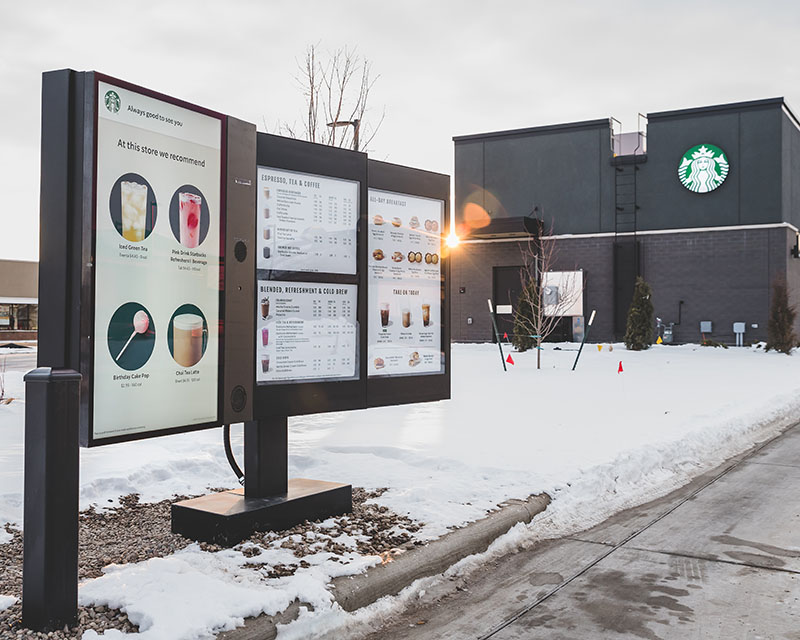
Outdoor illuminated signage extends your visibility into low-light and high-competition environments. LED light boxes help you maintain consistent brightness and legibility regardless of weather or time of day.
We design solutions like the Hidden Hinge Light Box to combine durability with operational ease. The hinged system allows fast graphic changeouts while protecting internal components from weather exposure and tampering.
Outdoor light boxes help you:
- Strengthen storefront identity in competitive retail zones
- Improve visibility in shopping centers and plazas
- Support time-sensitive promotional messaging
- Guide customers near entrances and entry points
- Maintain visibility after dark or in poor weather
In many retail environments, illuminated signage directly influences whether customers choose your location over nearby competitors.
Interior Retail Signage
Interior signage shifts from attracting attention to guidance. Once customers enter your store, signage determines how easily they navigate, what they notice, and how they move toward purchase decisions.
Strong interior systems also increase engagement depth. When customers feel oriented and confident, they spend more time exploring, which increases exposure to promotional messaging and secondary product categories they may not have originally intended to browse.
Interior signage also plays a psychological role. It reduces cognitive load. Instead of asking “Where do I go next?” customers naturally follow visual cues that guide them toward decision points.
Directional and Wayfinding Signs
Wayfinding signage creates structure within your retail location. It guides customers to departments, service counters, restrooms, and product categories without requiring staff assistance.
Without clear navigation, customers slow down, miss key areas, or abandon their searches entirely, especially in large-format retail environments where product density creates confusion.
Directional signage helps you:
- Reduce customer confusion and frustration
- Improve traffic flow across the store
- Encourage cross-department exploration
- Support accessibility and ease of movement
- Create a more organized shopping experience
Clear hierarchy and consistent placement improve performance more than visual complexity or decorative design.
Promotional Signage
Promotional signage drives attention to high-value opportunities within your store. Nearly 60% of shoppers turn their attention toward in-store displays. You place promotional signage where customers already make decisions, such as aisle ends, entry points, and product clusters.
Because timing matters, promotional signage works best when it aligns with customer intent rather than interrupting it.
You use promotional signage for:
- Discount campaigns and seasonal sales
- Buy-one-get-one promotions
- Limited-time offers
- New product launches
- Seasonal merchandising activations
Frequent updates keep your retail environment aligned with inventory movement and marketing priorities, while also maintaining visual freshness that encourages repeat engagement.
Product Information Signage
Product signage removes friction at the decision stage. When you clearly communicate features, pricing, and specifications, you reduce hesitation and increase purchase confidence.
You also reduce staff dependency for routine questions, which improves operational efficiency in high-traffic environments.
Standardized product signage across locations also strengthens brand consistency and ensures customers receive a uniform experience regardless of store.
Point of Sale (POS) Signage
POS signage captures attention at the final stage of the customer journey. At checkout, customers remain open to small, low-friction decisions that increase transaction value.
You use POS signage to promote add-ons, loyalty programs, and impulse purchases without disrupting checkout flow.
Effective POS signage focuses on:
- Impulse-buy items
- Loyalty enrollment opportunities
- Membership upgrades
- Gift card sales
- Cross-sell opportunities
Short, direct messaging performs best in this high-speed decision environment.
Illuminated and Backlit Signage
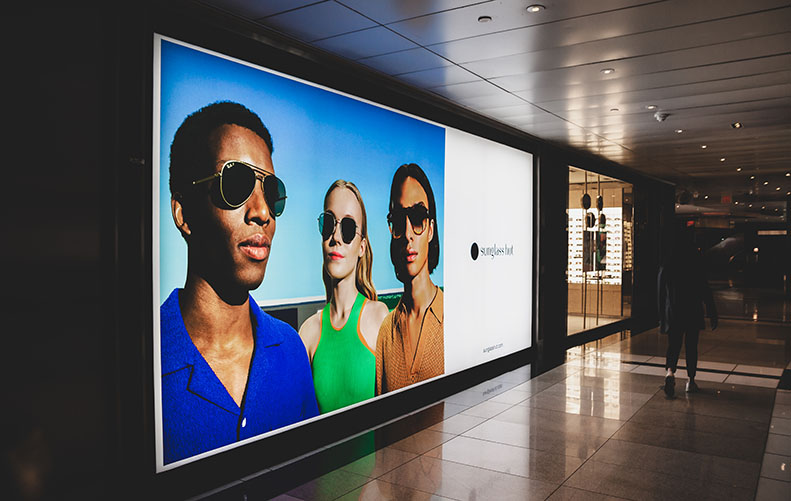
Illuminated signage strengthens visibility while elevating brand perception in both interior and exterior environments. LED systems deliver consistent brightness, sharper visuals, and improved durability compared to traditional lighting.
At DSA Signage, we manufacture solutions like ultra-thin LED light boxes for retail environments where clean design and premium presentation matter.
When you need flexibility for fast updates, you can use backlit LED fabric SEG light boxes. These systems allow quick graphic changes without replacing structural components, which supports agile marketing cycles.
Illuminated signage also improves how customers interpret your brand. Bright, even lighting communicates professionalism, attention to detail, and consistency across locations.
Key benefits include:
- Reliable visibility in all lighting conditions
- Stronger visual hierarchy for promotions
- Elevated brand perception in competitive spaces
- Long-term durability in retail environments
- Fast and efficient graphic changeouts
Retail Signage Guidelines: How to Choose the Right Mix
An effective signage strategy starts with customer behavior rather than design preference. When you understand how shoppers move, pause, and make decisions, you can place signage where it delivers the greatest impact.
Match Signage to Your Store Type
Luxury retailers often benefit from a smaller number of premium displays, while big-box stores typically require more directional signage and promotional messaging. Specialty retailers frequently rely on product information and brand storytelling to support purchase decisions.
Map Signage to the Customer Journey
Each stage of the shopping experience creates a different signage opportunity. Exterior signs attract attention and guide visitors to your entrance, while interior signage helps shoppers navigate, evaluate products, and make purchasing decisions. Point-of-sale displays can reinforce loyalty programs and encourage add-on purchases.
Plan for Graphic Changeouts
Retail environments change constantly. Seasonal promotions, merchandising updates, and brand refreshes require signage systems that support fast, efficient graphic updates without disrupting daily operations.
Prioritize Durability and Safety
Signage should perform reliably over the long term. Outdoor displays should use weather-rated construction, while interior systems should incorporate dependable commercial-grade components. Choosing UL-Listed signage helps support both safety and performance.
Choose a Manufacturer With Engineering Expertise
Retail projects often require custom sizing, installation support, and integration with existing store layouts. A manufacturer with experienced engineering resources can help ensure your signage remains reliable, effective, and aligned with your long-term goals.
Why Choose DSA Signage for Retail?
DSA Signage provides signage solutions that support both operational efficiency and brand performance.
We bring more than 50 years of experience to retail environments across the United States. We manufacture domestically to maintain quality control and dependable lead times.
We produce UL-Listed LED displays designed for commercial retail environments where safety and performance matter. Our engineering team also supports custom sizing, integration planning, and installation coordination.
Retail signage performs best when engineering, manufacturing, and support operate as one system. From initial concept through installation, we work with you to eliminate uncertainty and reduce project risk.
Our customer service team is easily accessible, communicative, and responsive throughout every phase so that you always have access to support when you need it. We’re also proud to go the extra mile for our customers.
Ready to Plan Your Retail Signage Strategy?
When you align exterior, interior, and illuminated signage, you create a structured environment that improves customer flow, strengthens merchandising impact, and increases conversion potential.
If you are ready to build a retail signage system designed for performance and scale, request a quote today.